Email:janelle.taft@taftaestheticsllc.com Call: 252-373-9466 110 Brentwood Center Ln.Wilson, NC 27896
|
|

| |
|
|
| |
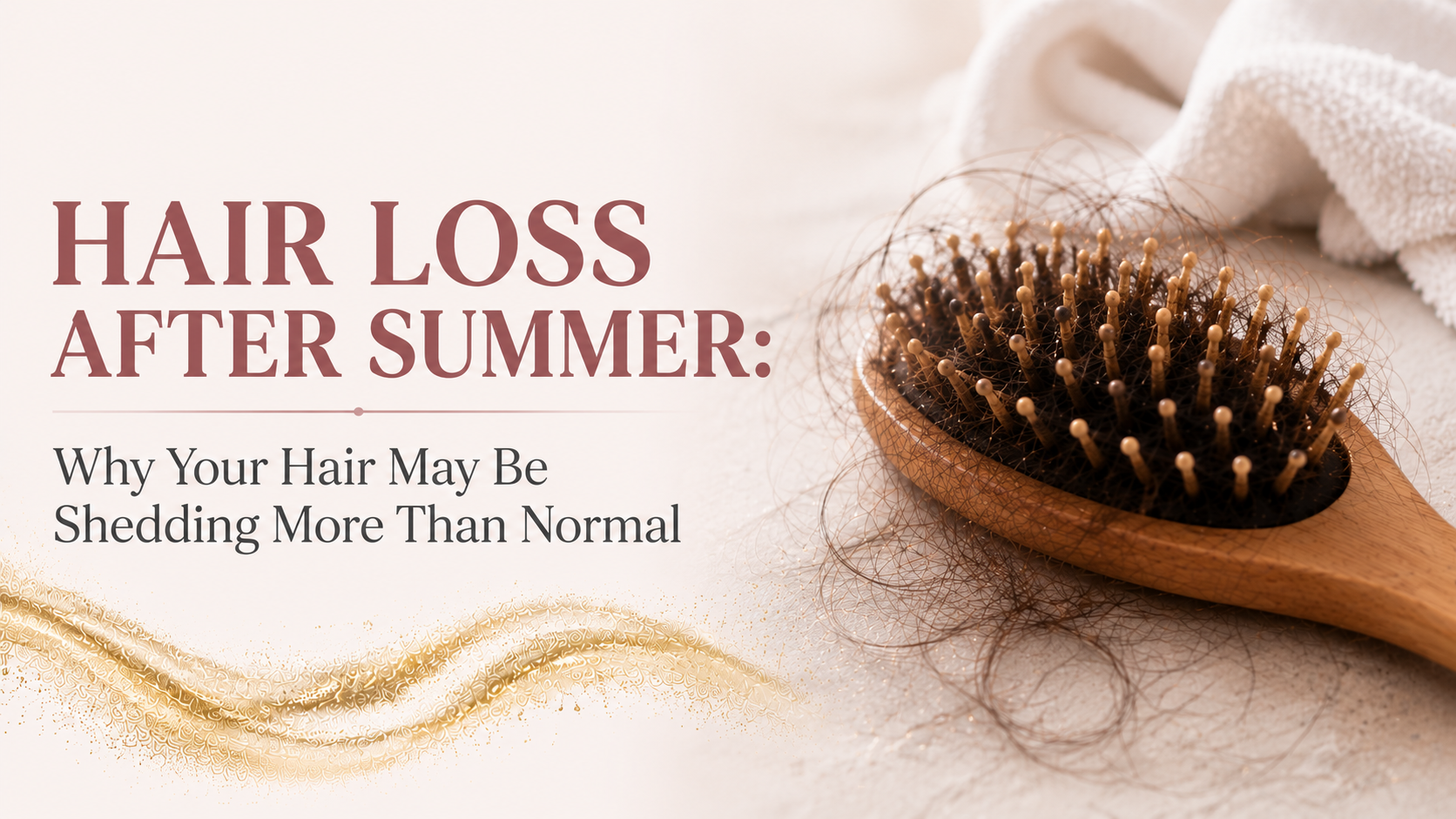
As Summer comes to an end, many people begin noticing more hair in their brush, shower drain, or on their pillow.
If you’ve recently experienced increased hair shedding, you’re not imagining it.
Seasonal hair loss is a real phenomenon that affects many men and women, especially during late summer and early fall.
At Taft Aesthetics in Wilson, NC, we often hear questions about why hair seems to thin after months of sunshine, swimming, and heat.
Understanding the causes of seasonal hair shedding can help you determine what’s considered normal—and when it may be time to seek professional evaluation for hair loss.
Yes. Research has shown that many people naturally experience increased hair shedding during the late summer and early fall months. This temporary condition is sometimes referred to as seasonal shedding.
The average person loses approximately 50 to 100 hairs each day as part of the normal hair growth cycle.
During seasonal shedding, that number may temporarily increase as more hair follicles enter the resting (telogen) phase before new hair begins to grow.
For most individuals, this increased shedding lasts several weeks to a few months before normal growth resumes.
Several factors may contribute to increased hair loss after summer.
1. The Natural Hair Growth Cycle
Hair continuously moves through four phases:
• Anagen (Growth Phase): Active hair growth that lasts several years.
• Catagen (Transition Phase): A short period where growth slows.
• Telogen (Resting Phase): Hair prepares to shed.
• Exogen (Shedding Phase): Old hairs fall out to make room for new growth.
During late summer, a larger percentage of hair follicles naturally transition into the shedding phase, making seasonal hair shedding appear more noticeable.
2. Sun Exposure
Just like your skin, your scalp is exposed to ultraviolet (UV) radiation throughout the summer.
Excessive sun exposure may:
• Dry out the scalp
• Damage the hair shaft
• Increase breakage
• Cause scalp inflammation
• Weaken existing hair
A healthy scalp plays an important role in maintaining healthy hair growth.
3.Heat and Humidity
High temperatures and humidity can increase sweat and oil production on the scalp.
When sweat, oil, and environmental debris build up around hair follicles, they may contribute to:
• Scalp irritation
• Inflammation
• Product buildup
• Follicle congestion
While these issues don’t directly cause permanent hair loss, they can create an environment that isn’t ideal for healthy hair growth.
4. Chlorine and Salt Water
Summer activities often include swimming in pools or the ocean.
Repeated exposure to chlorine or salt water may:
• Strip natural oils from the hair
• Increase dryness
• Lead to brittle strands
• Cause more breakage that may resemble hair loss
Protecting your hair with fresh water before swimming and using moisturizing products afterward can help reduce damage.
5. Physical and Emotional Stress
Summer schedules often include travel, disrupted routines, increased sun exposure, illness, or major life events.
Physical stress—including surgery, illness, rapid weight loss, hormonal changes, or emotional stress—can trigger a condition known as telogen effluvium, one of the most common causes of temporary hair shedding.
With telogen effluvium, hair shedding typically begins two to three months after the stressful event, which is why many people notice increased hair loss after summer.
Although seasonal hair shedding is common, persistent hair loss should not be ignored.
Consider scheduling and evaluation if you notice:
• Hair shedding lasting longer than three months
• Widening of your hair part
• Visible thinning around the crown
• Receding hairline
• Bald patches
• Hair that isn’t growing back
• Significant changes in hair density
These symptoms may indicate an underlying condition such as androgenetic alopecia (pattern hair loss), hormonal imbalance, nutritional deficiencies, thyroid disorders, autoimmune conditions, or chronic scalp inflammation.
Modern hair restoration has advanced significantly in recent years, with treatments focused on supporting scalp health and stimulating healthier hair growth.
Depending on the underlying cause, treatment plans may include:
At Taft Aesthetics in Wilson, NC, LaseMD® Hair Restoration is offered as part of our comprehensive Hair Restoration Program.
LaseMD is a non-ablative fractional laser treatment that creates microscopic channels in the scalp.
These channels may enhance the absorption of physician-recommended topical hair restoration products while stimulating the scalp’s natural healing response.
The goal is to create a healthier environment for hair follicles and support improved hair density over time.
LaseMD Hair Restoration may be recommended for individuals experiencing early hair thinning or those looking to improve overall scalp health.
Taft Aesthetics also offers Microneedling with PRP for Hair Restoration.
Microneedling creates tiny controlled microchannels within the scalp.
When combined with Platelet-Rich Plasma (PRP), growth factors from your own blood are introduced into the treatment area.
Research suggests PRP for hair restoration may help:
• Support healthier hair follicles
• Improve scalp circulation
• Encourage thicker-looking hair
• Promote healthier hair growth cycles
Results vary from person to person and often require a series of treatments.
A Comprehensive Hair Restoration Program
Hair loss is often influenced by multiple factors, which is why Taft Aesthetics’ Hair Restoration Program takes a comprehensive approach rather than relying on a single treatment.
Our Hair Restoration Program may include:
• LaseMD® Hair Restoration
• Microneedling with PRP
• Prescription hair restoration medication, when appropriate
• Customized at-home hair restoration treatment
• Medical-grade scalp care recommendations
• Ongoing progress evaluations
By combining advanced in-office procedures with physician-guided prescription therapies and personalized home care, the goal is to create an optimal environment for healthier, fuller-looking hair over time.
Whether you’re experiencing seasonal hair shedding or simply want to maintain healthy hair growth, these habits can support scalp wellness:
• Eat a balanced diet rich in protein, iron, zinc, and vitamins.
• Stay well hydrated.
• Protect your scalp from prolonged UV exposure.
• Avoid excessive heat styling.
• Wash away sweat and product buildup regularly.
• Manage stress through healthy lifestyle habits.
• Avoid overly tight hairstyles that place tension on the hair.
Healthy hair begins with a healthy scalp.
All content copyright © 2024 Taft Aesthetics LLC
Web design by www.WebDesignAssociates.net